

Marks that last as long as the part does.
PINSTAMP® Dot Peen Markers
Mechanical pin-on-metal marking. Permanent. Deep enough to survive whatever happens next. Handheld, benchtop, integrated.
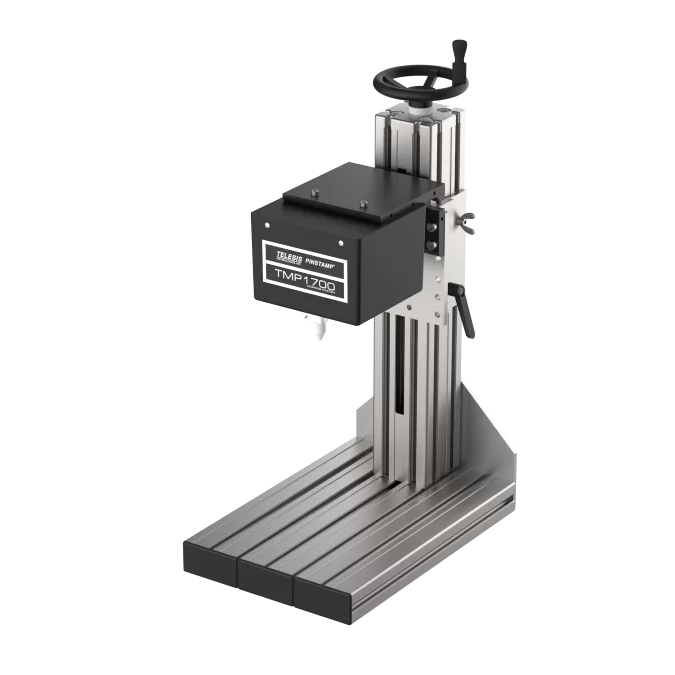
PINSTAMP® TMP1700
If you've seen a Telesis dot peen marker on a factory floor, it was probably a TMP1700. Most popular model in the lineup. Programmable, runs standalone or integrated, takes interchangeable tool posts. Built to outlive whatever it's bolted to.
Key Specifications:
- Standalone or integrated operation
- Programmable alphanumeric, logos, barcodes
- Interchangeable tool posts
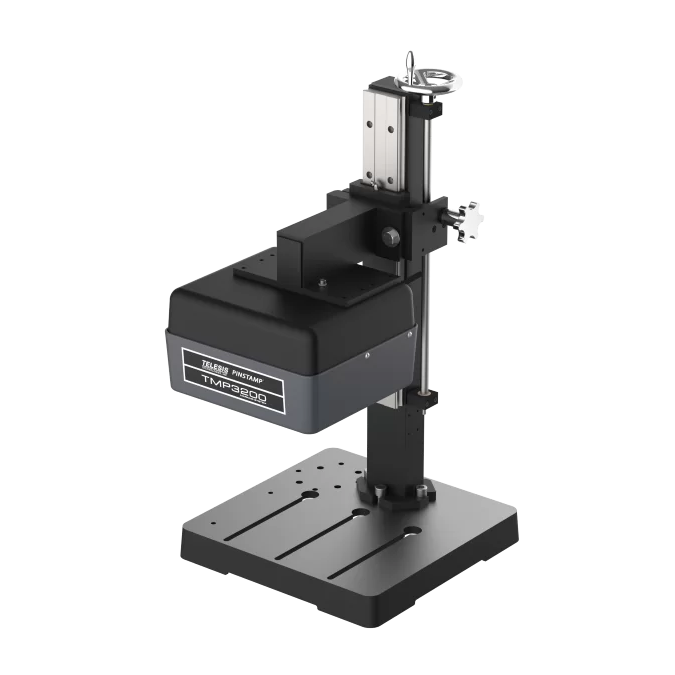
PINSTAMP® TMP3200
TMP1700's bigger sibling. Larger marking field, deeper marks, faster pin actuation. The pick when the part is too big for the 1700's window or the spec calls for character heights the smaller unit can't hit.
Key Specifications:
- Expanded marking field over TMP1700
- High-speed pin actuation
- Deep marking capability
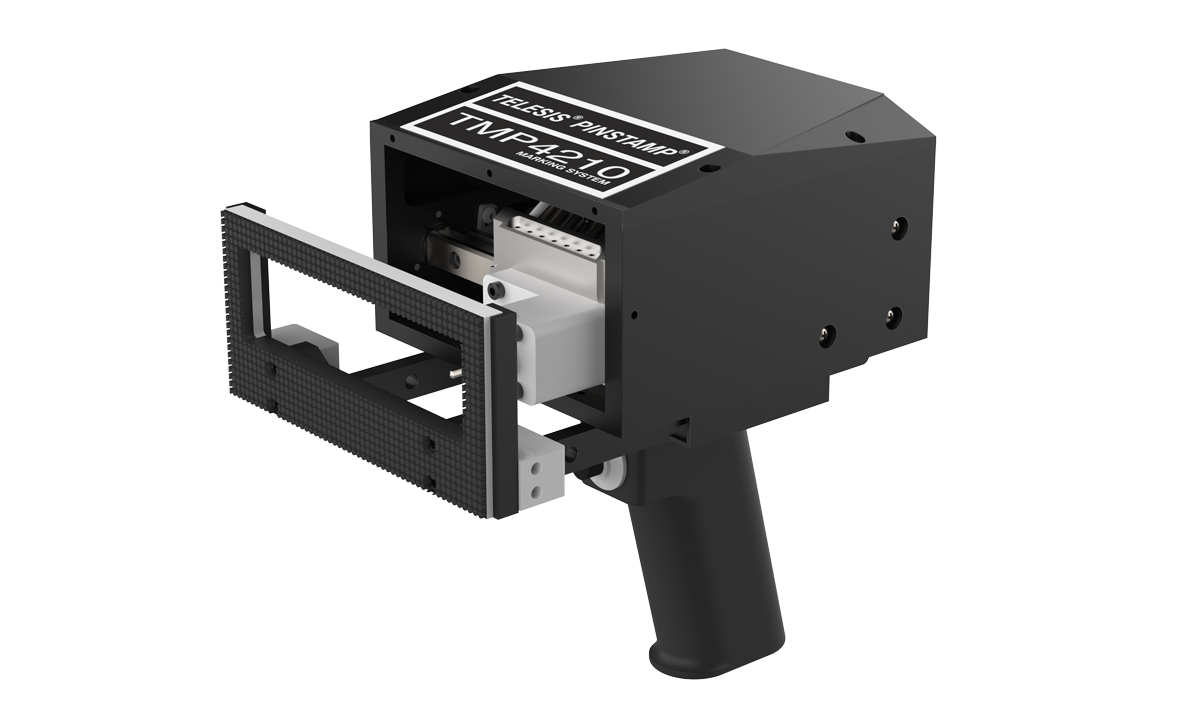
PINSTAMP® TMP4210
Handheld dot peen — carry it to the part instead of bringing the part to a station. Quick-disconnect tool posts, multi-strike on tough surfaces, 0.5" x 2" window. Good for big weldments and anything that won't move.
Key Specifications:
- 0.5" x 2.0" marking window
- Max marking speed: 8 characters/sec
- Marking depth: 0.001–0.013"
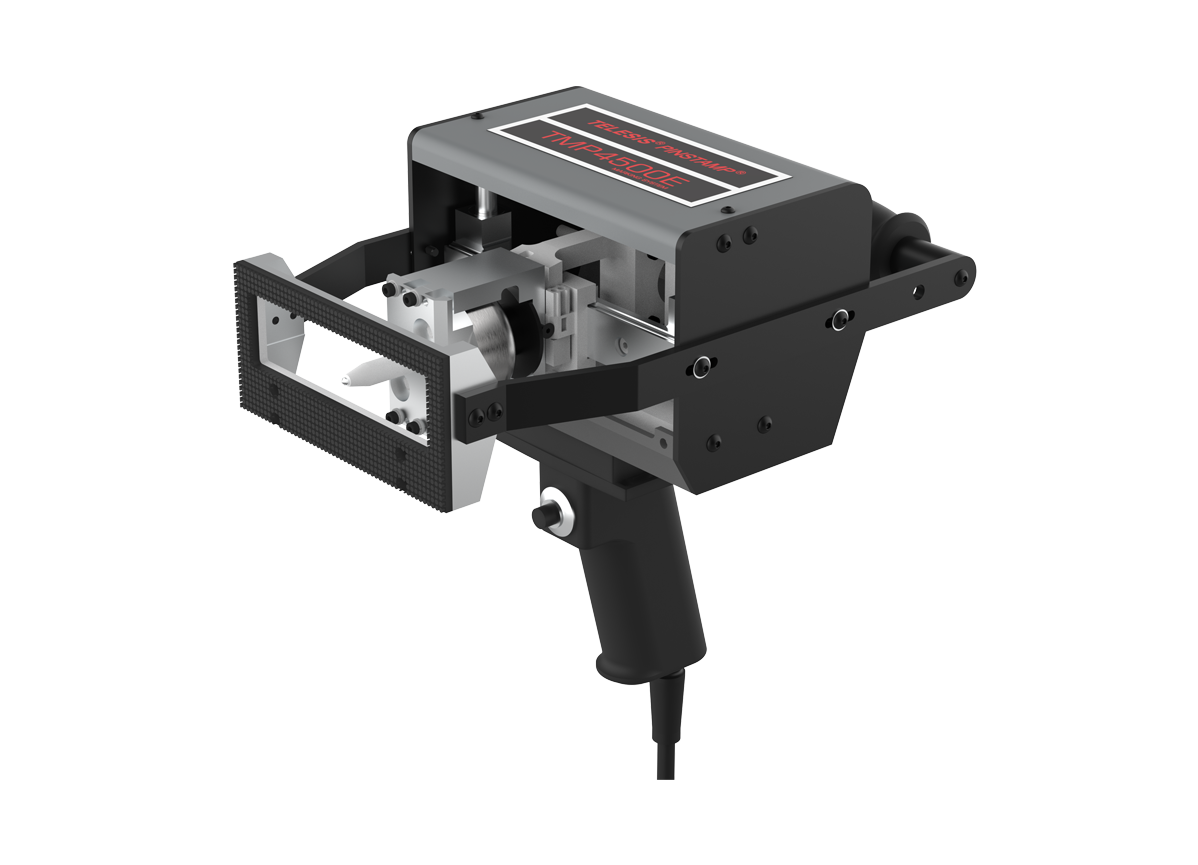
PINSTAMP® TMP4500E
Same handheld concept, no air line. Runs off a standard AC outlet. The right pick for field service, clean rooms, and shops that haven't already plumbed compressed air everywhere.
Key Specifications:
- Electric actuation — no compressed air
- Self-contained portable design
- Ergonomic handheld form factor
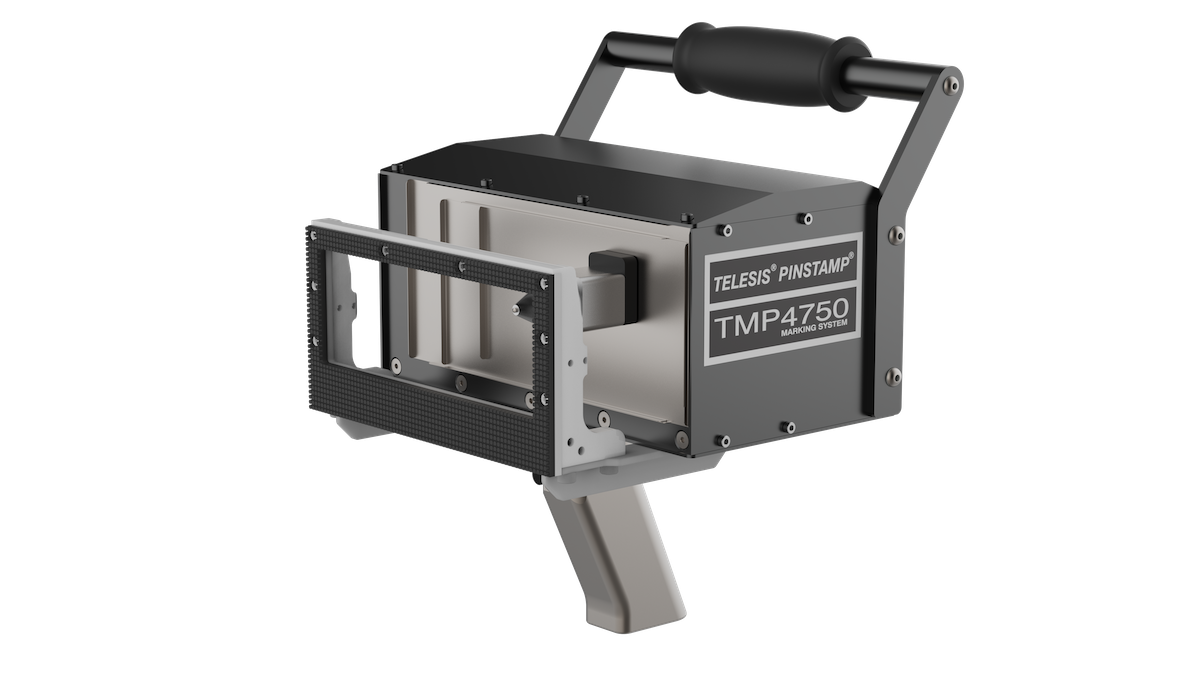
PINSTAMP® TMP4750
Big pin force, all-metal body, deep marks on materials that punish lesser markers. Hardened steel, castings, forged parts. Stays legible after the part has been blasted or coated.
Key Specifications:
- Deep marking on hardened steel
- High pin force for difficult materials
- Durable all-metal construction
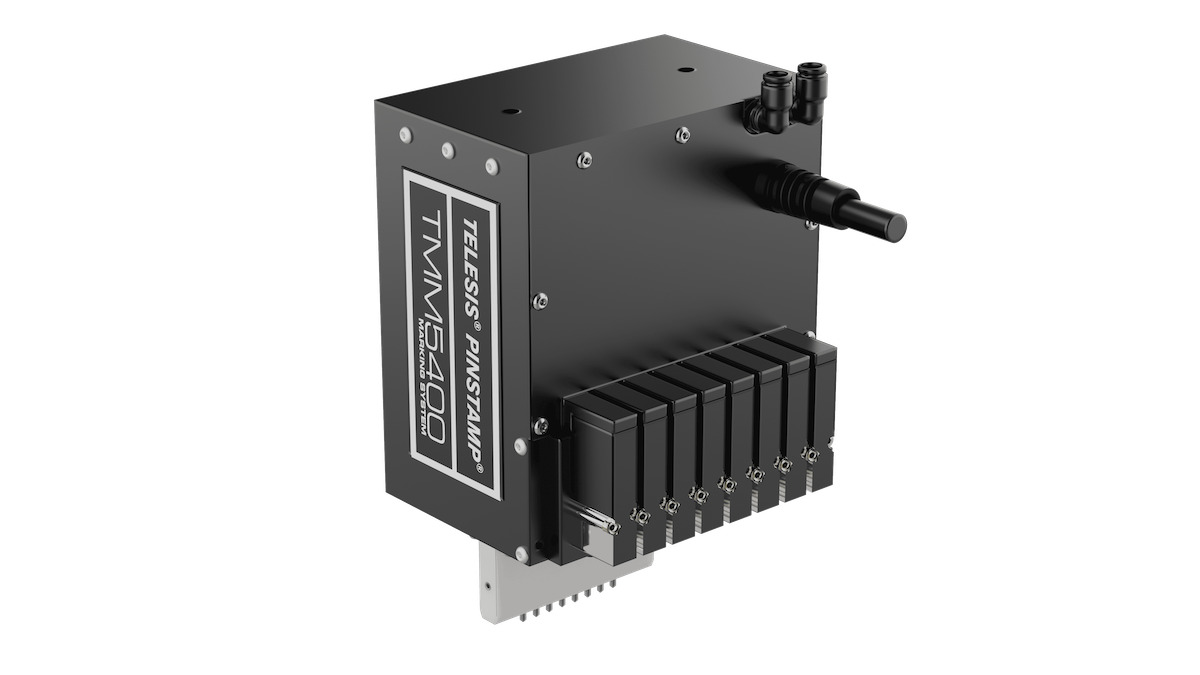
PINSTAMP® TMM5400
Multiple pins fire at once. So a mark that takes ten seconds on a single-pin unit happens in a fraction of that. Built for automotive assembly lines and high-volume serial marking where every second of cycle time matters.
Key Specifications:
- Multi-pin simultaneous marking
- Faster cycle times vs. single-pin
- High-volume production rated
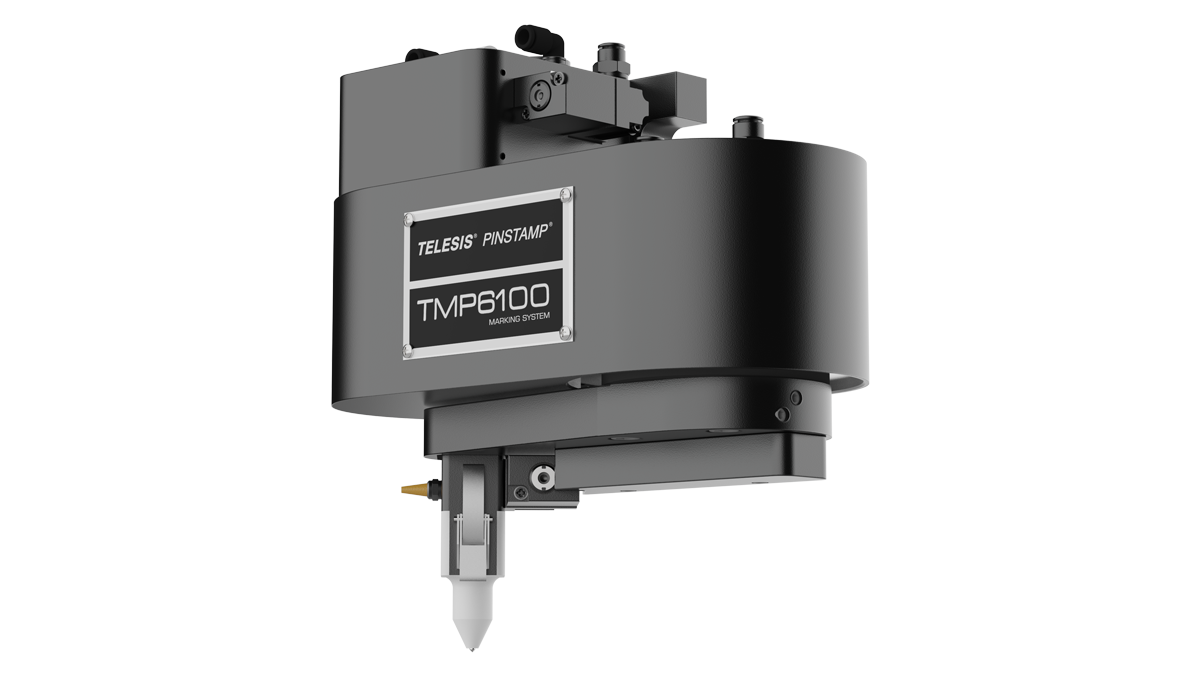
PINSTAMP® TMP6100
Built to ride a robot arm or gantry. Compact head fits into tight spaces, holds position to within tolerances that matter for cylindrical and oddly-shaped parts. Shafts, tubes, medical implants — places where a benchtop unit can't reach.
Key Specifications:
- Optimized for cylindrical parts
- Robotic arm integration design
- Unmatched positional accuracy
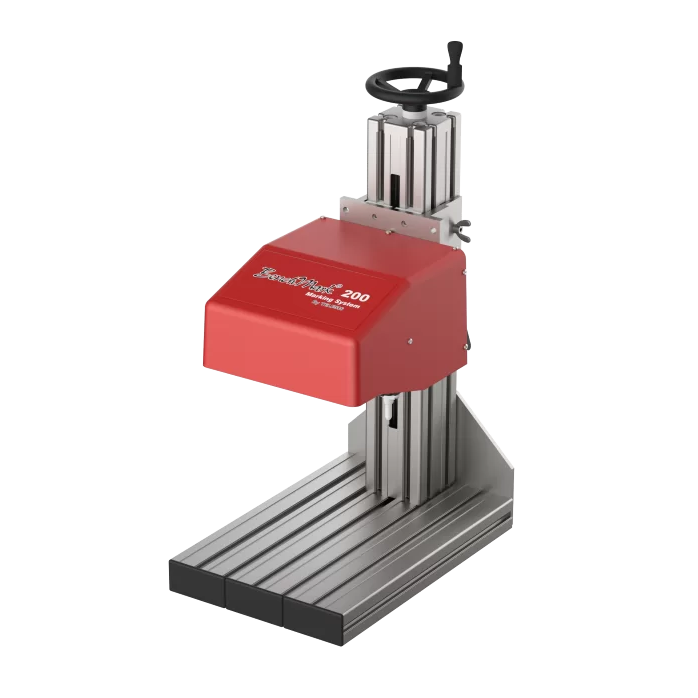
BenchMark200®
Self-contained benchtop unit. Controller and display built in, small footprint, quick to set up. The kit a job shop or toolroom buys when they need marking but not a production line.
Key Specifications:
- Integrated benchtop workstation
- Built-in controller and display
- Compact footprint
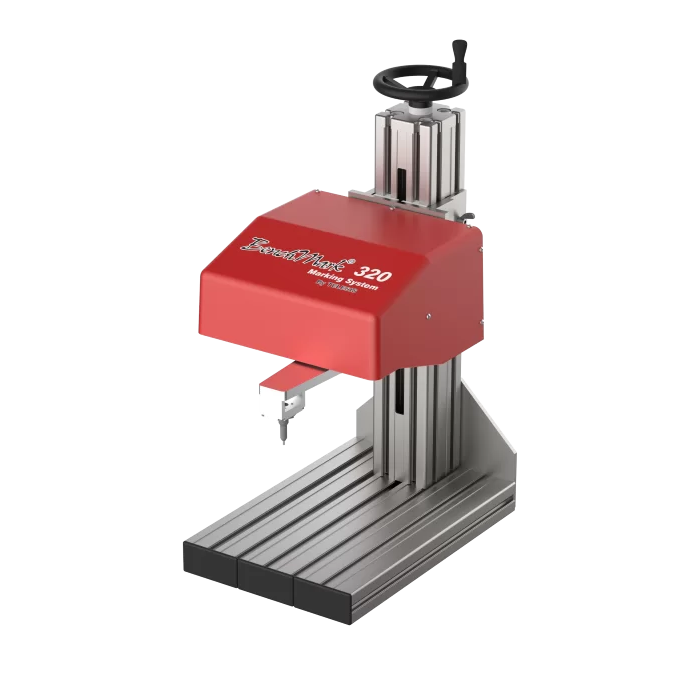
BenchMark320®
BenchMark200 with a bigger work area. Same self-contained design, X-Y precision head, and 2D Data Matrix support. Engine parts, machined components, QC stations — anywhere the 200's envelope runs out.
Key Specifications:
- Expanded marking area vs. BenchMark200
- Precision X-Y marking head
- Integrated display and keyboard
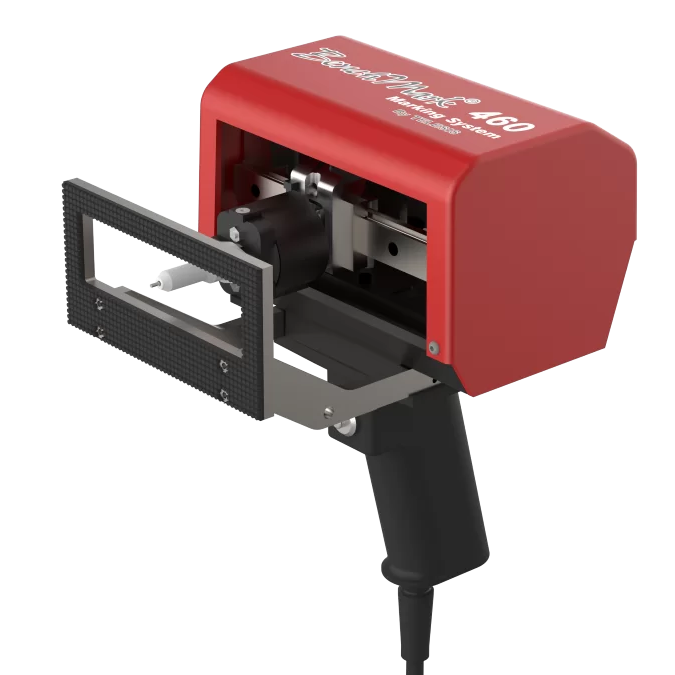
BenchMark460®
BenchMark capability in a handheld body. Runs on battery or AC, holds programs in onboard memory. Big weldments, frame assemblies, anywhere you need to bring the marker to a part that won't move.
Key Specifications:
- Handheld portable design
- Battery or AC operation
- Large marking window for handheld
Laser Marking Systems
Six wavelengths covering every material you'd ever need to mark. Fiber, MOPA, CO2, UV, green, vanadate. Pick by what you're marking, not by what the rep happens to be selling.
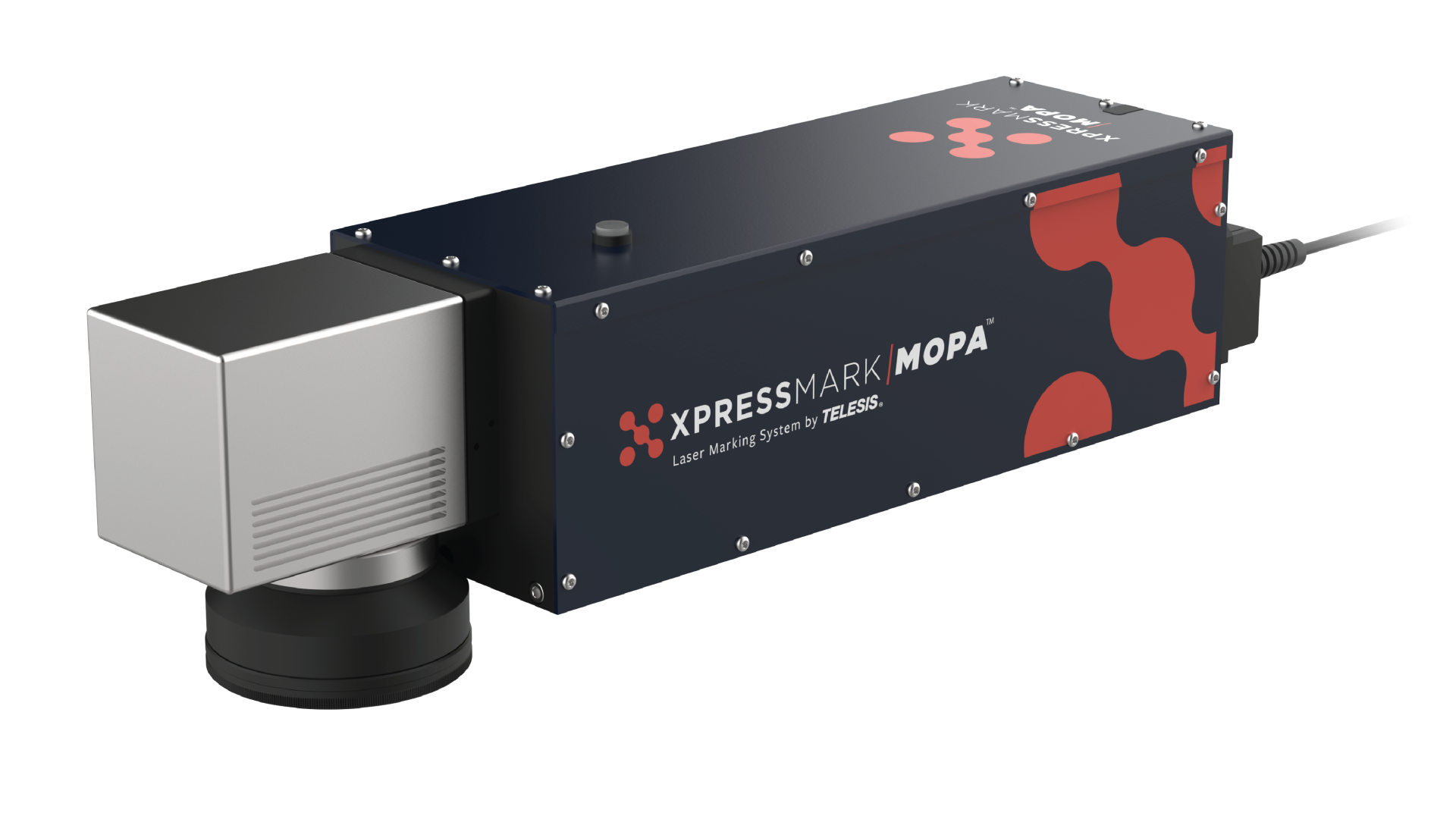
XpressMark MOPA™
MOPA fiber laser, 30/60/100W. The Master Oscillator Power Amplifier design lets you tune pulse width and frequency independently — which is the trick for color marking anodized aluminum and for fine work on plastics that scorch under a standard fiber.
Key Specifications:
- Power: 30W / 60W / 100W MOPA fiber
- Independent pulse width & frequency control
- Color marking on anodized aluminum

XpressMark™
Workhorse fiber laser, 30/50/100W. Marks metals, plastics, ceramics. Handles 1D and 2D barcodes, Data Matrix, the lot. If you don't need MOPA's pulse-tuning, this is the default pick.
Key Specifications:
- Power: 30W / 50W / 100W fiber laser
- High-speed galvo scanning head
- Marks metals, plastics, ceramics
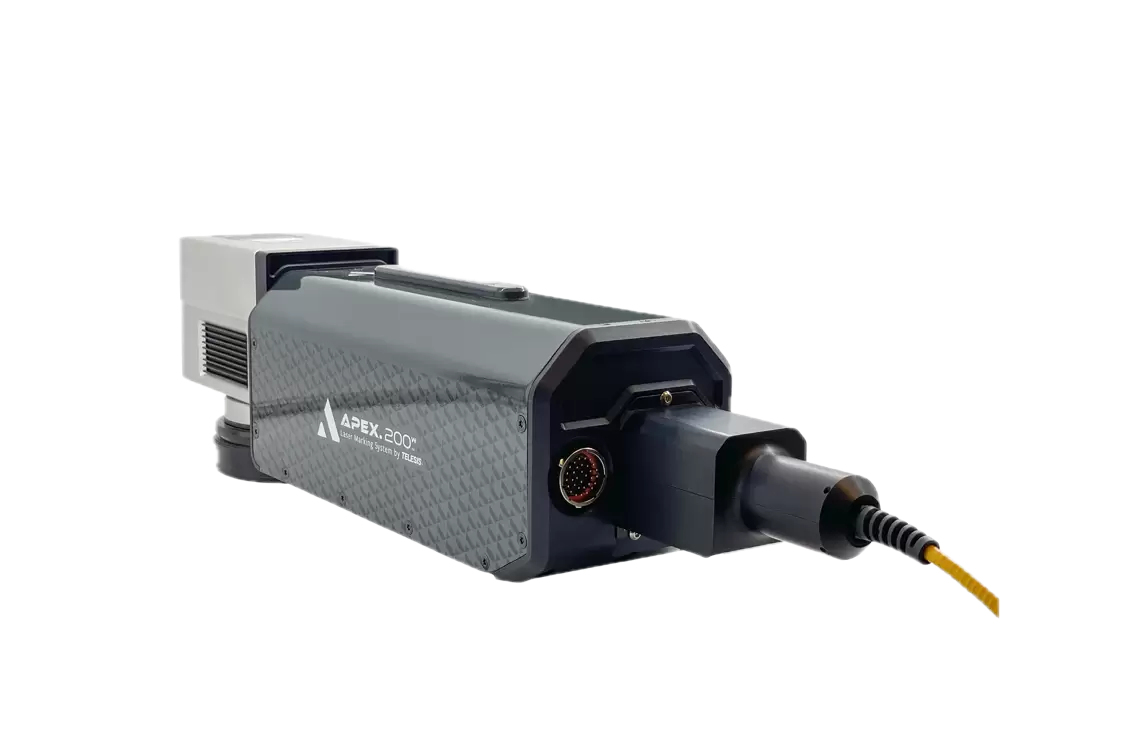
APEX.200™
200W fiber. Big laser, big throughput, deep engraving on hardened steel. Aerospace, automotive at production rates, anywhere a smaller fiber would slow the line down.
Key Specifications:
- 200W fiber laser source
- High-speed marking at production rates
- Deep engraving on hardened steel
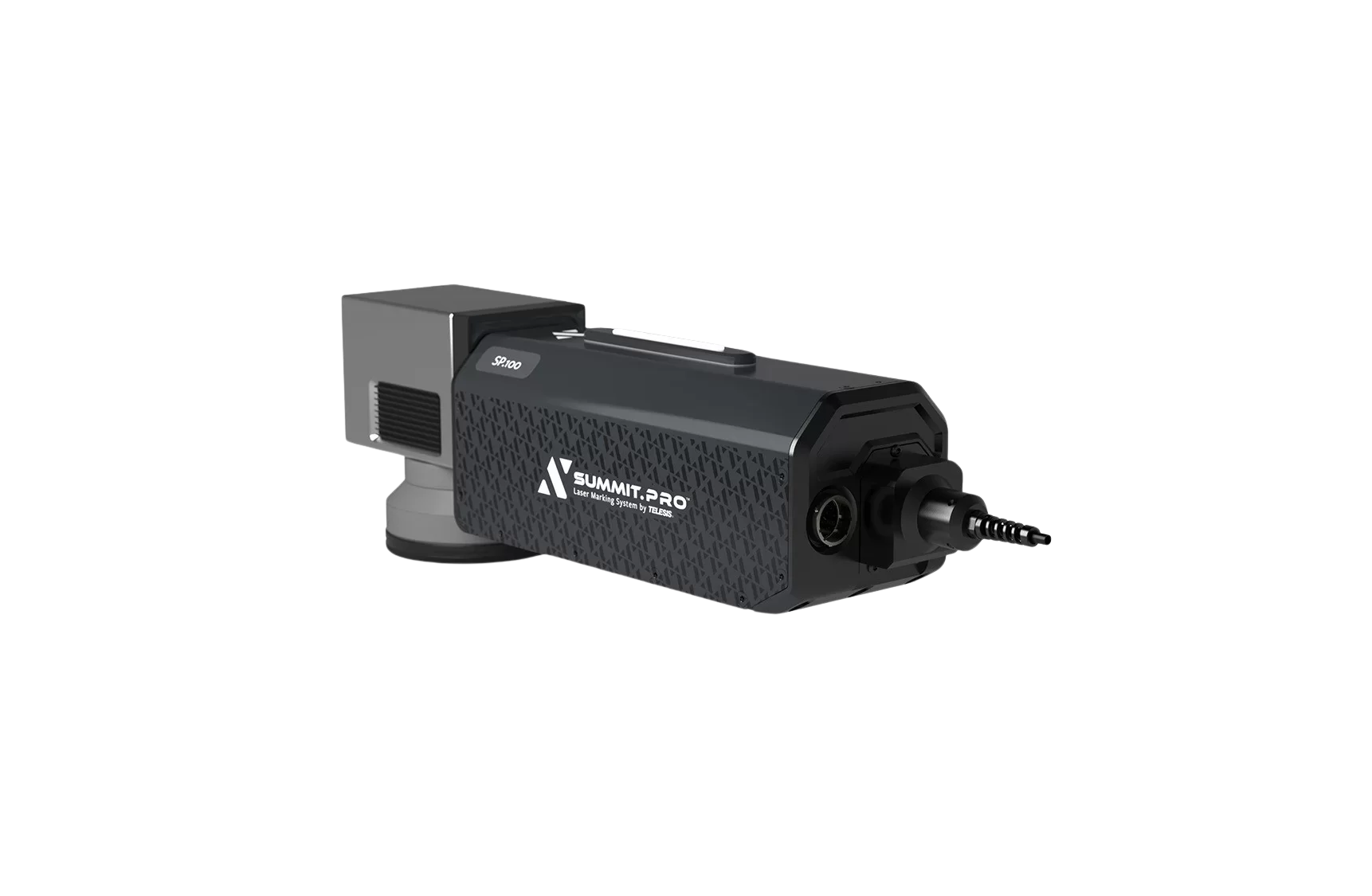
Summit.Pro™
30/50/100W fiber in a heavy industrial enclosure. Built for 24/7 lines and harsh environments. Auto focus, robust frame, rated for continuous duty cycles that would cook a lighter unit.
Key Specifications:
- Power: 30W / 50W / 100W fiber laser
- Heavy-duty industrial enclosure
- Continuous production rated
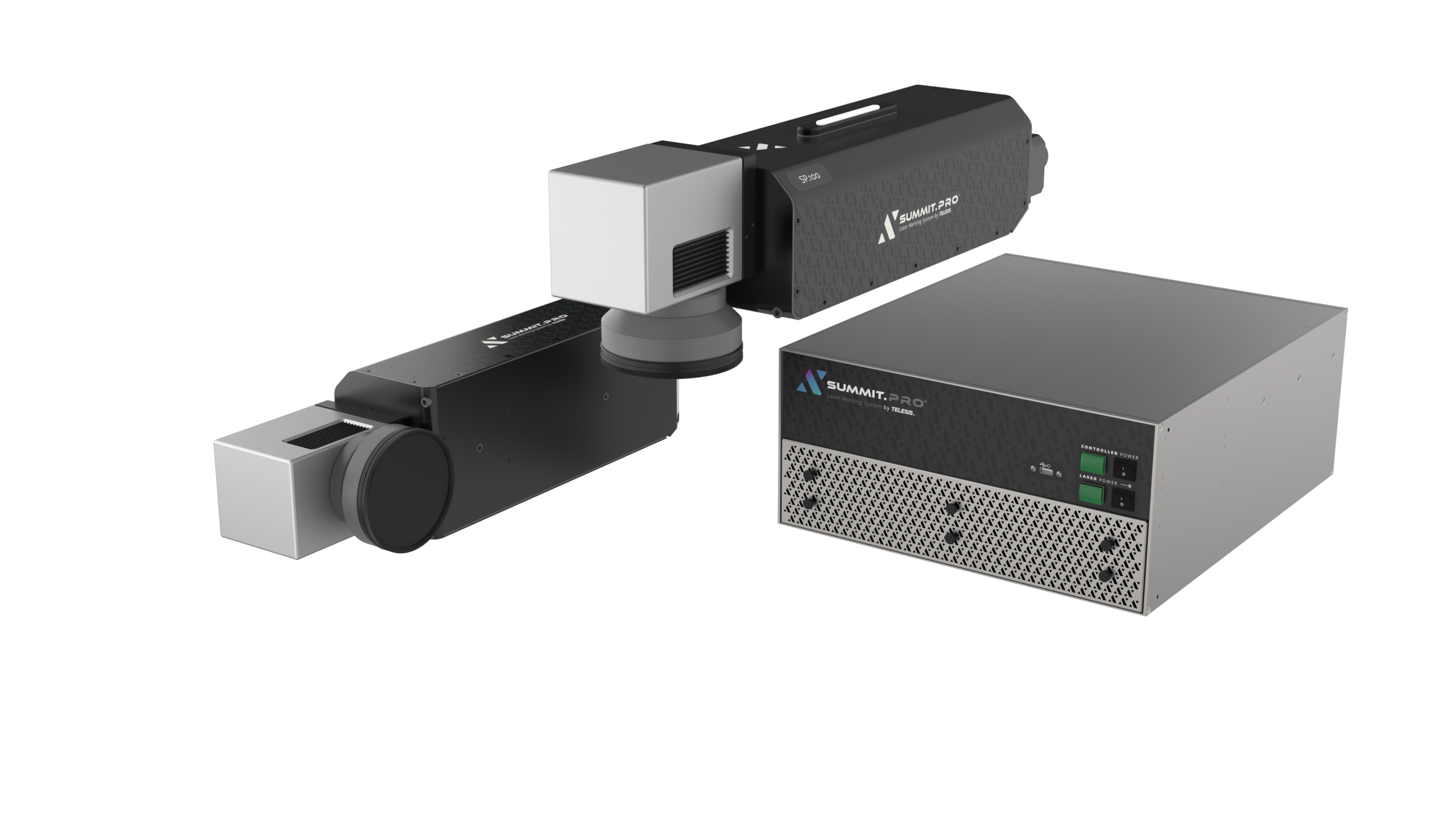
Dual-Head Laser System
Two scanning heads, two parts at once — or both sides of one part. Throughput essentially doubles. Useful when you've got bilateral symmetry on the part and one head per side cuts the cycle in half.
Key Specifications:
- Dual independent scanning heads
- Simultaneous 2-part or 2-side marking
- Doubles effective throughput
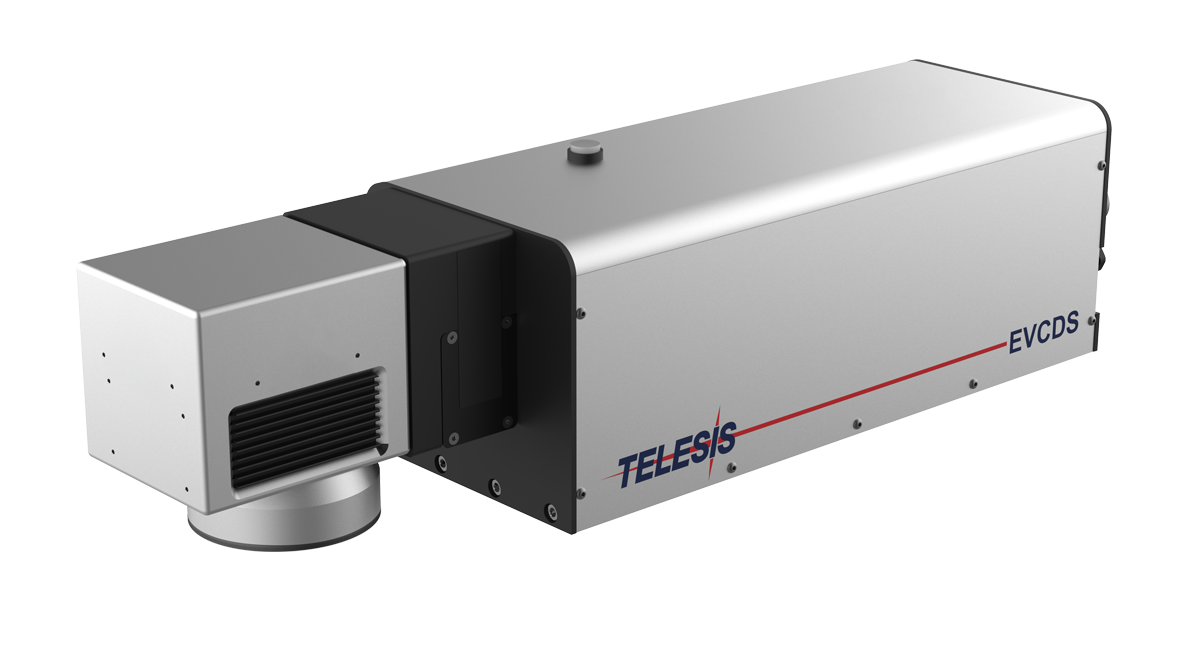
Vanadate Laser Markers (EVCDS)
Nd:YVO4 vanadate laser, 1064nm. Short pulse, minimal heat affected zone. The pick for plastics that warp under fiber, coated metals, PCBs, and specialty medical polymers.
Key Specifications:
- Nd:YVO4 vanadate laser source
- Optimized for plastics and coatings
- Short pulse duration for minimal HAZ
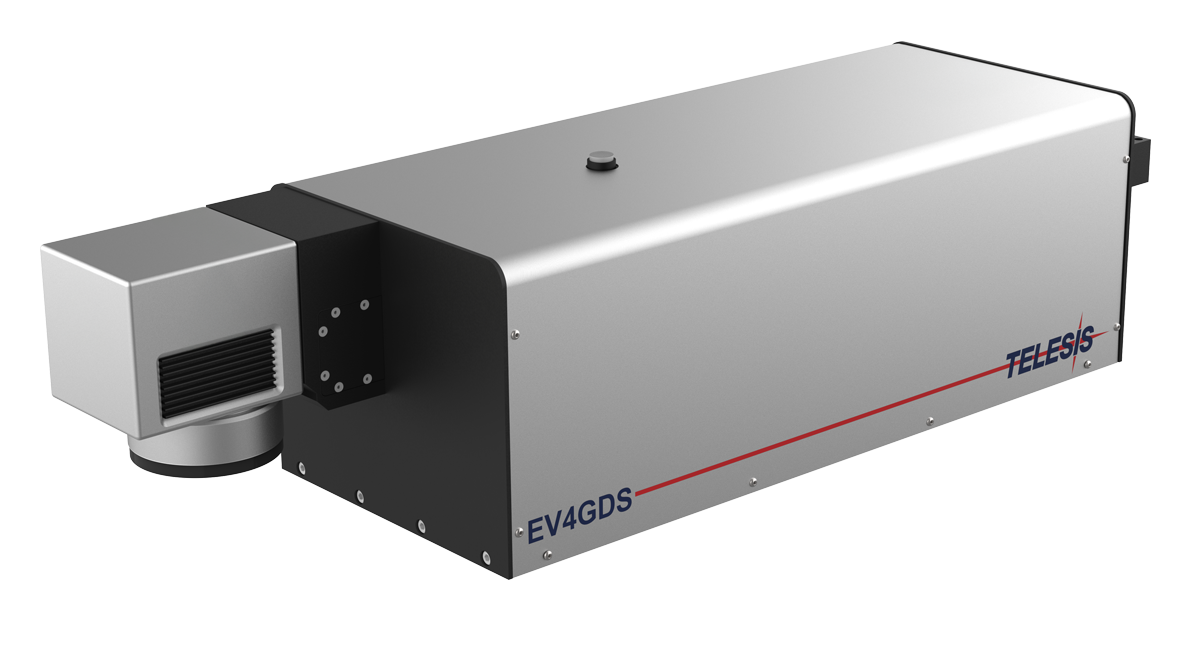
Green Laser Markers (EV4GDS)
Green at 532nm — frequency-doubled from a 1064nm source. Copper and gold reflect IR, so a standard fiber bounces off them. Green absorbs. The answer for marking PCBs, gold-plated parts, and thin reflective films.
Key Specifications:
- Wavelength: 532nm (green)
- Marks copper and gold cleanly
- High absorption on reflective metals
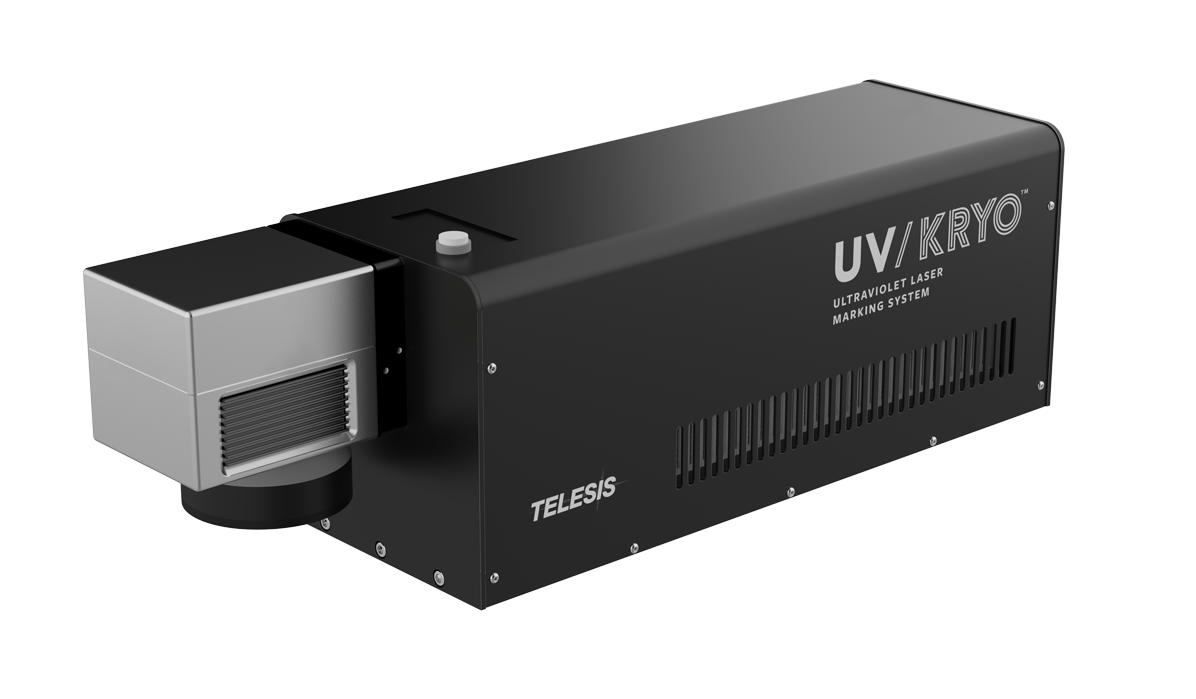
UV/KRYO™
355nm UV. "Cold" laser — it photochemically marks the material instead of burning it. No thermal damage on plastics, no discoloration, sub-surface marking inside glass. Standard kit for FDA UDI work and pharmaceutical packaging.
Key Specifications:
- Wavelength: 355nm (UV)
- Cold marking — minimal thermal effect
- High-contrast on plastics & glass
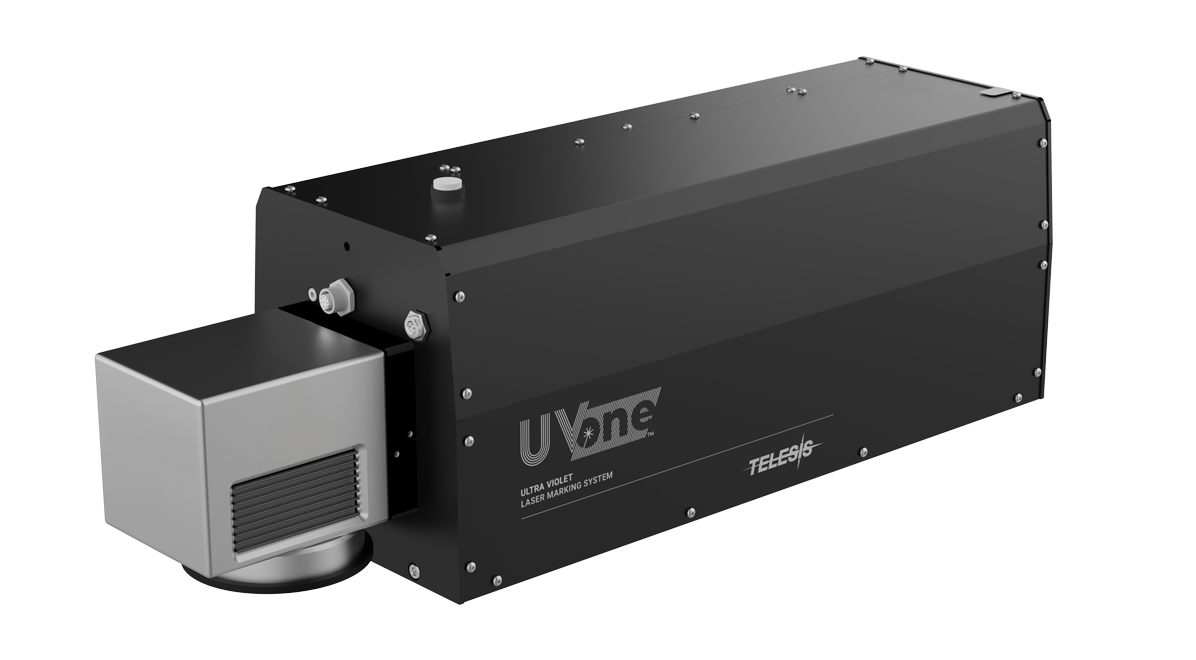
UV/One™
Entry-point UV. Same 355nm cold-marking idea as the KRYO, smaller package, lower operating cost. For shops that need UV capability but don't need the full production envelope.
Key Specifications:
- Wavelength: 355nm UV fiber laser
- Compact, space-saving design
- Fine detail cold laser marking
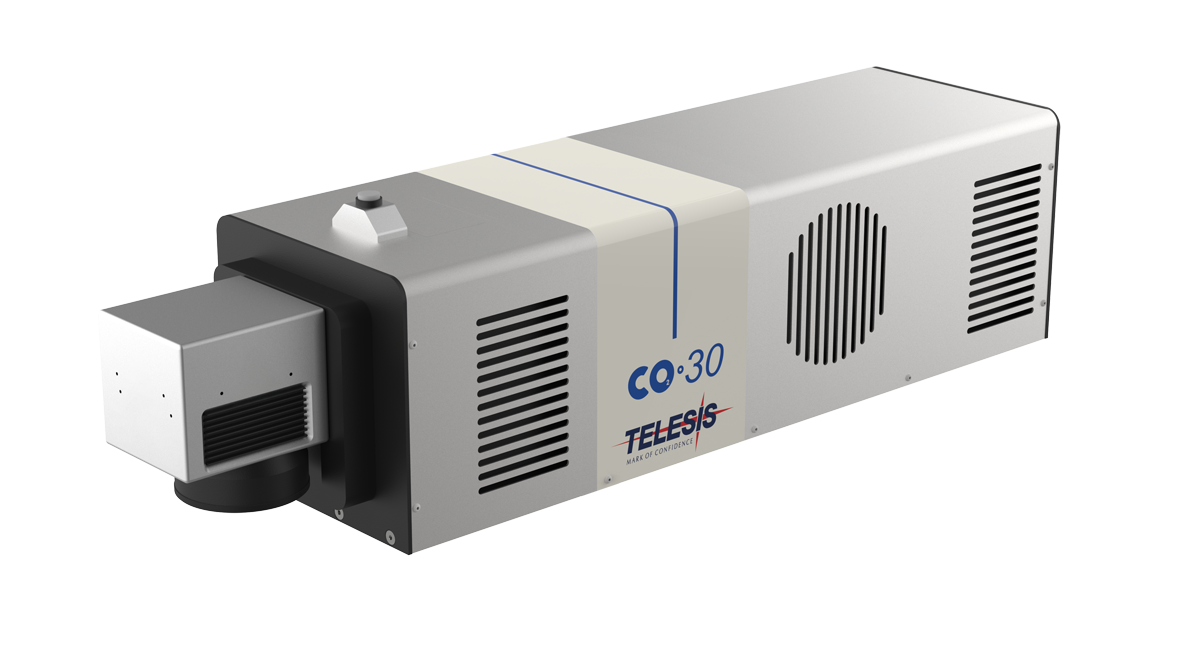
CO2 Laser Markers
CO2 at 10.6μm. Non-metals: plastics, rubber, wood, leather, glass, cardboard. Fast, high contrast, and inexpensive to operate. The right wavelength when fiber lasers just bounce off your material.
Key Specifications:
- Wavelength: 10.6μm CO2
- High-speed marking on non-metals
- Excellent contrast on plastics & rubber
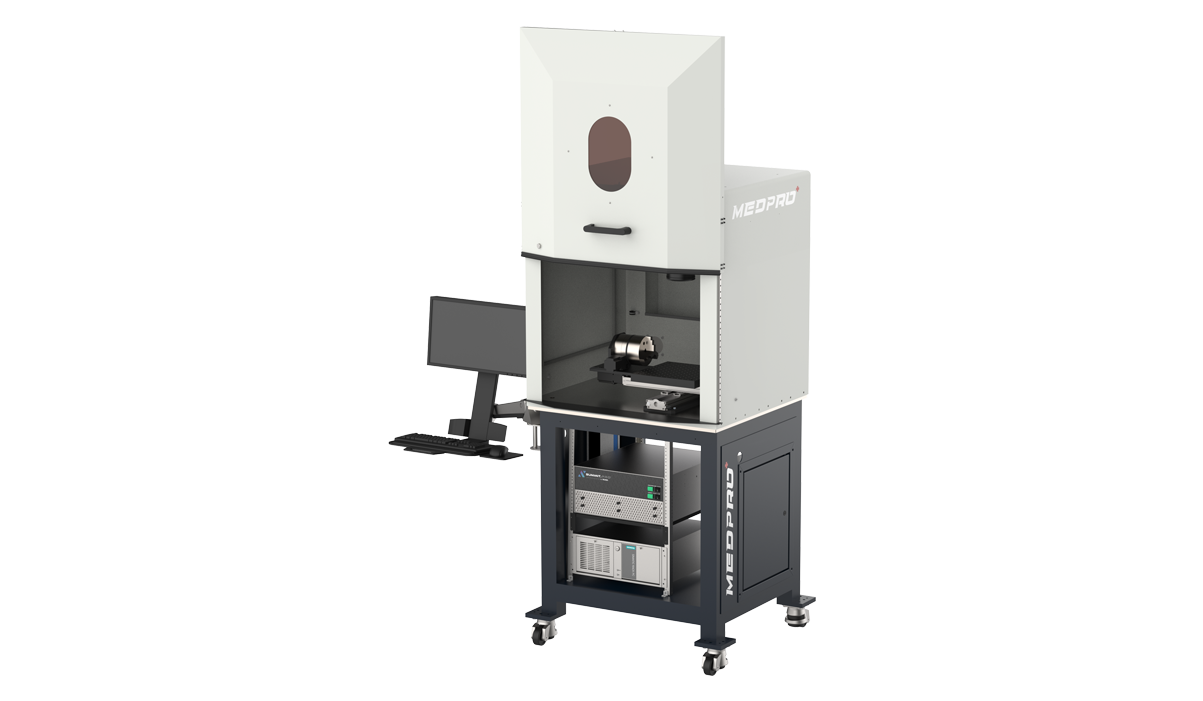
Laser Enclosures
Safety enclosures that turn an open-beam laser into a Class 1 system. Interlocked doors, fume extraction port, fits any Telesis laser. What you need to pass OSHA and still hit production rate.
Key Specifications:
- Class 1 laser safety compliance
- Interlocked access doors
- Compatible with all Telesis lasers
About Telesis Technologies
Telesis is in Circleville, Ohio, and they've been doing this since 1972. PINSTAMP® dot peen was theirs first — the patented mechanical marker that's still on assembly lines fifty years later. The laser side came later and now covers every wavelength that matters: fiber, MOPA, CO2, UV, green, vanadate.
Why customers end up specifying Telesis is usually one of three things. Compliance — VIN, UDI, UID, 2D Data Matrix all done correctly the first time. Durability — the marks survive heat treat, paint, blasting, and twenty years on a shelf. Or process fit — Telesis systems drop into automated cells without integration headaches.
Bravo carries the full lineup. If you're not sure whether you need a dot peen, a fiber, or a UV cold laser, that's a phone call. We've helped engineers sort this out before.
Core Capabilities
They invented PINSTAMP
Mechanical dot peen has been Telesis territory since the early '70s. The marks survive blasting, paint, heat treat — basically anything the part survives.
Every laser wavelength
Fiber, MOPA, CO2, UV, green, vanadate. Whatever material you're marking, one of these is the right call.
Compliance-ready
UID, UDI, VIN, 2D Data Matrix, QR. Telesis systems get specified by aerospace primes, defense, medical OEMs, and automotive Tier 1s.
Drops into a line
Every unit runs standalone or integrated. Robotic cells, conveyors, PLC interfaces — all of it works without a custom integration project.
Need a Telesis Marker?
Tell us the part, the material, and what mark you need on it. We'll pick the right one.